

IMAN Holding Highlights AI-Driven Approach to Islamic Banking Innovation
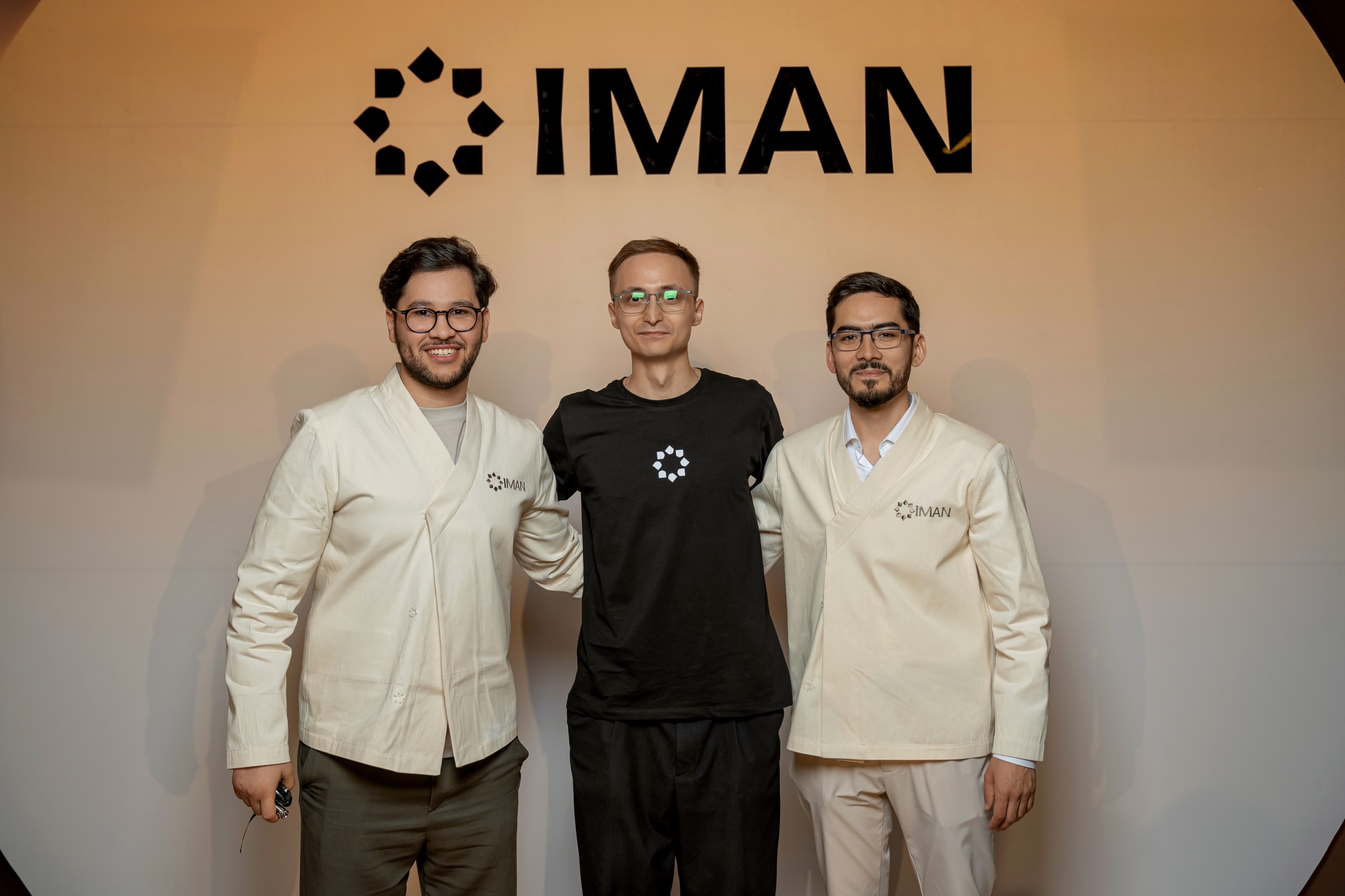
Shakhzod, Bekzod, and Rustam - Pillars behind Iman's AI Islamic Bank

Shakhzod Shukurov - Co-Founder and Chief Risk & Data Officer at IMAN Holding, leading the development of AI-driven financial systems.

Rustam Rahmatov - Founder, Chairman and Group CEO of IMAN Holding

IMAN’s AI companion “Aisha” delivers real-time financial guidance, helping users make smarter decisions based on behavior and context.

IMAN Super App Benefits
IMAN pioneers AI-driven banking that understands users, not just transactions, as it expands into the GCC
For decades, banking systems have been structured around transactions, including deposits, payments, lending, and repayment. These systems have evolved in efficiency and accessibility but remain largely unchanged in how they interpret user behaviour.
According to Shakhzod Shukurov, Co-Founder and Chief Risk and Data Officer at IMAN Holdings, this model is approaching its limitations.
“Banking today is still a system of records,” he says. “It tracks what you did. It doesn’t understand why you did it.”
Shakhzod identifies the gap between activity and intent as a key area for innovation in financial systems. This perspective informs the development of IMAN, founded by Rustam Rahmatov in 2020 to build a digital financial platform based on accessibility and responsible financial practices.
The company’s flagship product, the IMANUM super app, integrates multiple financial tools within a single mobile ecosystem, enabling users to save, invest, make payments, and access financial services through a unified interface.
Since its launch in Uzbekistan, the platform has recorded significant growth. IMANUM currently serves more than 780,000 registered users, including over 120,000 monthly active users. The company reports more than $15 million in assets under management, with approximately $2 million in new assets added each month.
From Data Processing to Behavioural Understanding
Prior to joining IMAN, Shakhzod worked in data science and fraud analytics roles at major European financial institutions, including HSBC. During this period, he observed that many financial systems prioritised compliance and reporting functions over user-level behavioural understanding.
“The industry has spent decades optimising for risk and regulation,” he explains. “Very little of that effort has gone into building systems that actually understand people.”
At IMAN, this observation informed the company’s approach to product development. Rather than focusing solely on digital interfaces, the platform is designed to interpret behavioural patterns, contextual signals, and financial intent in real time.
Developing Adaptive Financial Systems
Following early adoption in Uzbekistan, IMAN is preparing to expand into the GCC region. This expansion reflects both user demand and broader market readiness for digital Islamic financial services.
The platform processes financing decisions in under 30 seconds using behavioural and alternative data sources, rather than relying exclusively on traditional credit scoring models.
According to Shakhzod, the primary innovation lies not in speed but in system adaptability.
“The real shift is that the system doesn’t just evaluate you. It learns you,” he says.
By analysing transaction patterns, device behaviour, and financial habits, the system builds a continuously evolving model of each user’s financial profile, referred to internally as a “financial personality.”
This approach enables the platform to move beyond reactive financial services toward more adaptive functionality, including contextual recommendations, risk identification, and real-time decision support.
AI as a Core Interface Layer
In many financial products, artificial intelligence is implemented as a supporting feature, such as chat interfaces or recommendation engines.
At IMAN, the company is developing a model in which AI functions as a primary interface layer.
“AI shouldn’t sit on top of the interface. It should be the interface,” Shukurov says.
This concept is reflected in the development of Aisha, an AI-based system designed to interact with users through natural language. The system is intended to support user engagement with financial services by adapting to preferences, goals, and contextual inputs.
“It’s closer to having a financial advisor than using an app,” he explains.
Trust and Transparency in Islamic Finance
In Islamic finance, compliance with ethical and regulatory principles is a core requirement. Financial products must adhere to defined structures, and users require visibility into how financial decisions are made.
According to Shakhzod, AI enables greater transparency by embedding compliance logic directly into system processes.
“AI allows us to make compliance visible,” he says. “Not hidden in documents, but embedded into the experience.”
IMAN integrates Shariah-compliant frameworks into its platform, allowing users to understand both the outcomes and the rationale behind financial decisions.
The company has secured backing from multiple international investors, including eight venture capital firms and financial institutions. These include 500 Global in the United States, as well as investors based in Singapore and Kazakhstan.
Predictive Financial Systems
IMAN is also developing capabilities focused on predictive financial modelling.
“The future of banking is predictive,” Shakhzod says. “Not in a way that feels intrusive, but in a way that feels supportive.”
These systems are designed to identify behavioural patterns, anticipate user needs, and support financial decision-making before explicit inputs are provided.
In this model, financial systems transition from passive service providers to active participants in user financial management.
Infrastructure Development and Ecosystem Integration
Beyond its consumer-facing platform, IMAN is developing infrastructure to support the deployment of AI-powered, Shariah-compliant financial services by other institutions.
This includes systems designed to enable integration across financial ecosystems, allowing multiple services to operate through a shared intelligence layer.
“We don’t think the future is one app that owns everything,” Shakhzod says. “It’s an ecosystem of services connected by intelligence.”
A Changing Definition of Banking
The company’s approach reflects a broader shift in how financial systems are conceptualised.
“The best financial system is not the one with the most features,” Shakhzod says. “It’s the one that understands you well enough to help you make better decisions.”
The founder behind Iman, Rustam Rahmatov, also notes that user expectations are also evolving.
“More people today want financial tools that align with their values,” he says. “Technology gives us the ability to build financial systems that are both accessible and responsible at the same time.”
This shift suggests that future financial systems may be defined less by scale or transaction volume, and more by their ability to interpret user behaviour and support decision-making.
Nasiba Z
IMAN Invest
+998 99 812 36 38
pr@imaninvest.com
Visit us on social media:
LinkedIn
Instagram
Facebook
YouTube
X
Other
IMAN - When it Matters
Legal Disclaimer:
EIN Presswire provides this news content "as is" without warranty of any kind. We do not accept any responsibility or liability for the accuracy, content, images, videos, licenses, completeness, legality, or reliability of the information contained in this article. If you have any complaints or copyright issues related to this article, kindly contact the author above.
